Fungal Nail Treatment in Myeongdong, Seoul
Fungal nail infections can become stubborn, painful, and difficult to treat without professional medical care. At OBLIV Clinic in Myeongdong, Seoul, patients can receive advanced fungal nail treatment using modern laser therapy, medical treatment, and personalized care plans designed to restore healthier nails and reduce recurrence. Foreign patients visiting Korea often choose Seoul for fungal nail treatment because of advanced technology, efficient treatment systems, and convenient access to English-friendly clinics.
Fungal Nail Treatment at a glance
- In short: Fungal nail infections can become stubborn, painful, and difficult to treat without professional medical care.
- Laser Fungal Nail Treatment in Korea: Laser treatment has become increasingly popular for fungal nail infections because it targets fungal organisms beneath the nail without damaging surrounding tissue.
- What Is a Fungal Nail Infection?: Fungal nail infection, also known as onychomycosis, occurs when fungi grow underneath or inside the nail.
- Oral Antifungal Medication: For moderate to severe fungal infections, oral medication may be recommended together with laser therapy.
- Topical Fungal Nail Treatments: Topical medications are often recommended for mild or early-stage fungal infections.
Why Patients Visit Seoul for Fungal Nail Treatment
Many international patients seek treatment in Korea because Korean clinics often combine multiple technologies and therapies for improved results.
At OBLIV Clinic, treatment may include:
Treatment plans are customized depending on the severity and duration of infection.
- Laser fungal nail treatment
- Oral antifungal medication
- Topical therapy
- Nail debridement
- Preventive foot care guidance
What Is a Fungal Nail Infection?
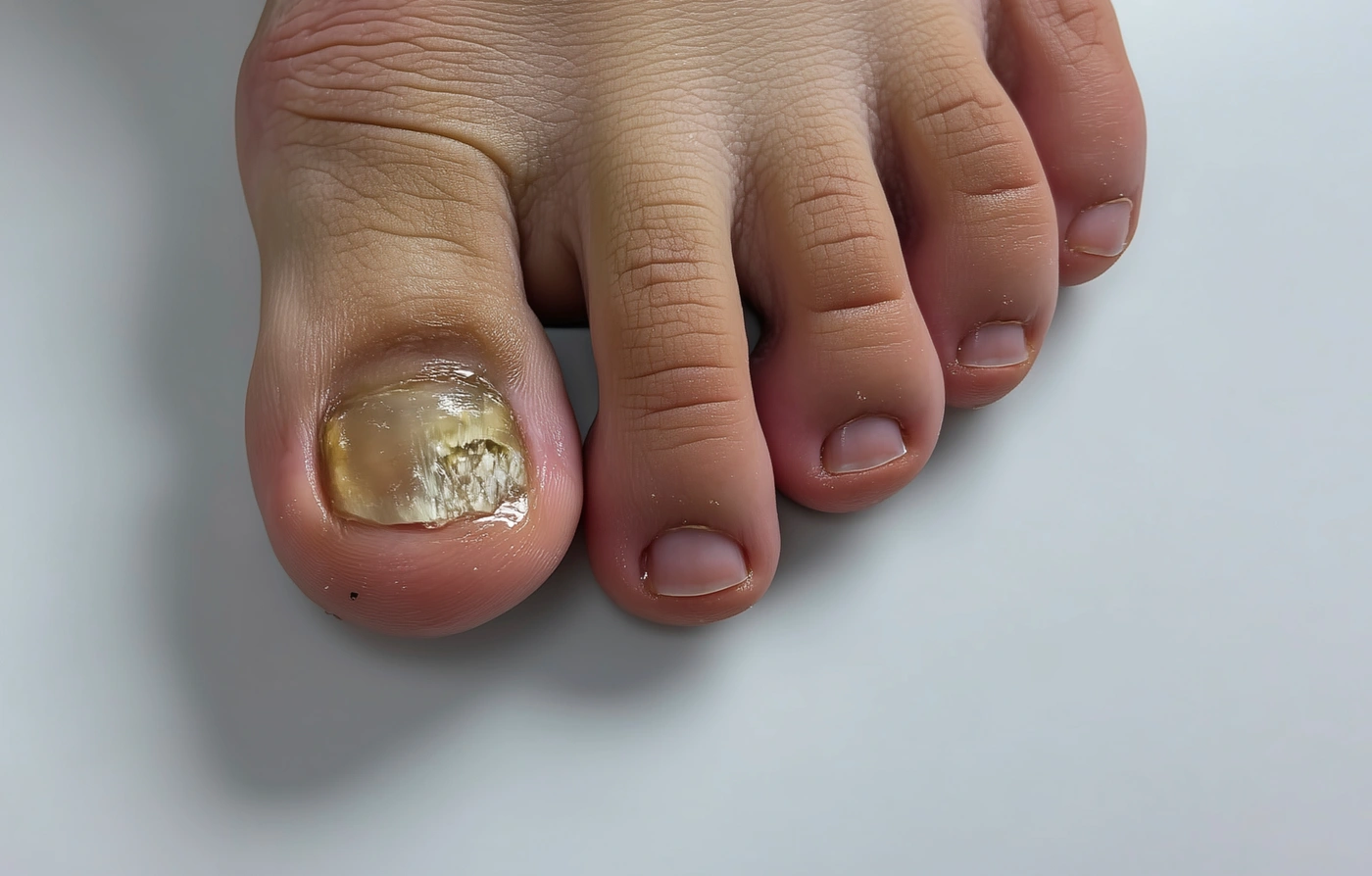
Fungal nail infection, also known as onychomycosis, occurs when fungi grow underneath or inside the nail. The condition most commonly affects toenails due to warm and moist environments inside shoes.
Common symptoms include:
- Yellow or brown discoloration
- Thickened nails
- Brittle or cracked nails
- Nail separation from the nail bed
- Distorted nail shape
- White debris beneath the nail
- Unpleasant odor in severe cases
Without treatment, fungal infections may spread to additional nails or surrounding skin.
Oral Antifungal Medication
For moderate to severe fungal infections, oral medication may be recommended together with laser therapy.
This option helps:
- Treat deeper fungal infection
- Improve long-term clearance rates
- Support healthier nail regrowth
Some patients may require liver function evaluation before prolonged medication use.
Laser Fungal Nail Treatment in Korea
Laser treatment has become increasingly popular for fungal nail infections because it targets fungal organisms beneath the nail without damaging surrounding tissue.
Benefits include:
- Non-invasive treatment
- Minimal downtime
- Quick outpatient sessions
- Little discomfort
- No recovery restrictions
- Suitable for busy travelers
Laser energy penetrates the nail plate and helps reduce fungal growth deep inside the nail structure.
Ask about your treatment plan →Before and after toenail fungus laser treatment
A real course of treatment at Obliv Clinic Seoul Origin, from the first visit to the final session.
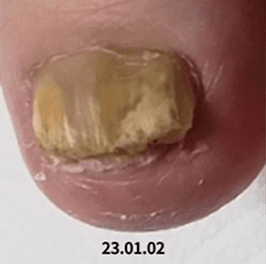
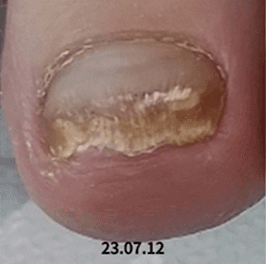
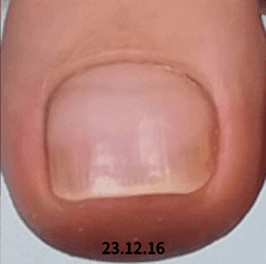
Individual results vary. The number of sessions depends on severity, nail growth and aftercare.
Topical Fungal Nail Treatments
Topical medications are often recommended for mild or early-stage fungal infections.
They may work best when combined with:
- Laser treatment
- Nail thinning
- Proper hygiene management
- Shoe disinfection
Combination therapy often improves treatment success rates.
How Long Does Fungal Nail Treatment Take?
Toenails grow slowly, which means fungal nail treatment requires patience.
Typical improvement timeline:
- Early visible improvement: 2–3 months
- Significant clearing: 6–12 months
- Full healthy nail regrowth: up to 12–18 months
Even after fungus is eliminated, damaged nail tissue requires time to fully grow out.
Why Early Treatment Is Important
Many patients ignore fungal nails because the condition develops gradually. However, untreated infections may worsen over time.
Potential complications include:
- Permanent nail deformity
- Pain while walking
- Spread to other nails
- Secondary bacterial infection
- Difficulty wearing shoes
- Increased recurrence risk
Early professional treatment generally improves long-term outcomes.
How to Prevent Fungal Nail Recurrence
Preventive care is essential because fungal infections commonly return if hygiene is not maintained.
Helpful prevention methods include:
- Keeping feet dry
- Changing socks daily
- Disinfecting shoes regularly
- Avoiding barefoot walking in public wet areas
- Treating athlete’s foot promptly
- Wearing breathable footwear
- Maintaining proper nail hygiene
Long-term foot care significantly reduces recurrence risk.
Who Should Consider Professional Fungal Nail Treatment?
Professional treatment may be recommended if you experience:
- Thick yellow toenails
- Chronic fungal infection
- Painful nail pressure
- Nail lifting or separation
- Failed over-the-counter treatment
- Recurrent fungal infections
- Cosmetic concerns regarding nail appearance
Accurate diagnosis is important because psoriasis, trauma, and other nail disorders can resemble fungal infection.
Foreigner-Friendly Fungal Nail Treatment in Myeongdong
OBLIV Clinic is conveniently located in central Seoul near major tourist areas, making treatment accessible for international patients visiting Korea.
Foreign patients often seek:
Many patients receive consultation and initial treatment even during short stays in Korea.
- English-friendly consultation assistance
- Convenient Seoul location
- Efficient appointment scheduling
- Minimal downtime procedures
- Personalized treatment plans
Fungal Nail Treatment: frequently asked questions
Is laser fungal nail treatment painful?
Most patients experience only mild warmth or tingling sensations during treatment.
How many sessions are needed?
The number of sessions varies depending on infection severity, nail thickness, and how many nails are affected.
Can fungal nail infection come back after treatment?
Yes. Recurrence is possible without proper foot hygiene and preventive care.
Do I always need oral medication?
No. Mild fungal infections may improve with laser and topical therapy alone.
Can tourists receive fungal nail treatment in Seoul?
Yes. Many foreign patients receive fungal nail treatment during short visits to Korea.
How do doctors confirm fungal nail infection?
Clinical examination and fungal testing may be recommended because some nail conditions mimic fungal infection.
Keep reading
Medical review
Written and medically reviewed by the Obliv Clinic Seoul Origin medical team, who diagnose and treat foot, nail and skin conditions in person in Seoul. Last reviewed on 14 October 2026. This page is for general information and does not replace a consultation.
Book your fungal nail treatment consultation.
Send us a photo and your travel dates on WhatsApp or KakaoTalk. We’ll reply with available times.
New paragraph
New paragraph