Ingrown Toenail Treatment in Seoul — correct the nail, keep the nail.
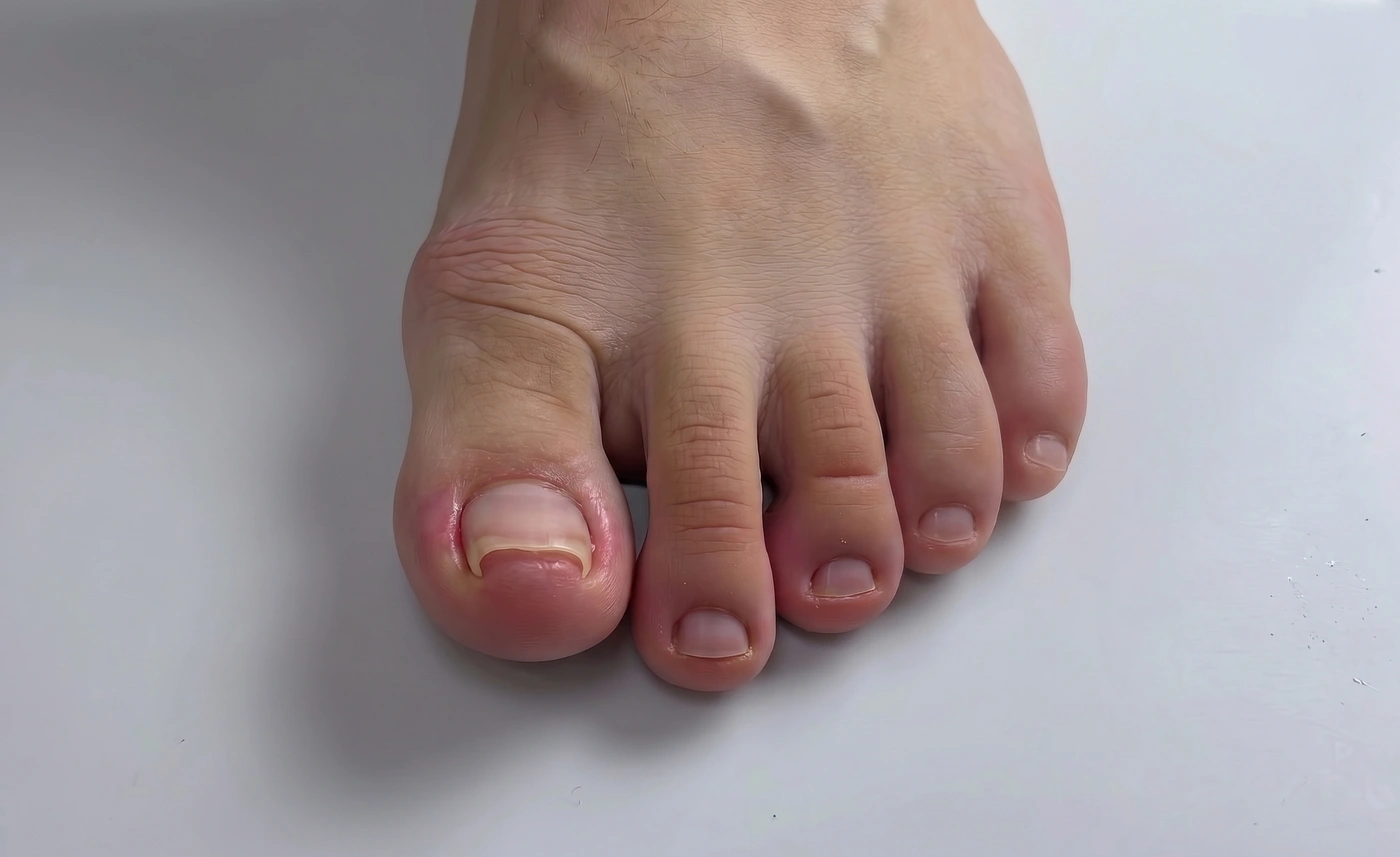
An ingrown toenail is treated by relieving the inflammation first, then correcting the nail’s curve so the edge stops digging into the skin. At Obliv Clinic Seoul Origin, near Myeongdong, most cases are corrected non-surgically with a dedicated nail-correction device; partial removal of the nail edge is considered only when medically necessary.
Ingrown toenails in 30 seconds
- What it is: the edge of the nail (usually the big toe) grows into the nail fold, causing pain, redness and swelling.
- Main causes: cutting nails too short or rounding the corners, tight shoes, a naturally curved nail and repeated toe pressure.
- How it is treated: inflammation and infection care, then non-surgical nail correction; partial nail-edge removal only for severe or recurring cases.
- Can it heal alone? Mild cases may settle with good nail care. Painful, infected or recurring cases need professional treatment.
- Prevention: cut nails straight across, not too short, and wear shoes with enough toe room.
Symptoms and causes
An ingrown toenail often starts as mild tenderness along the nail edge, but continued pressure can turn it into painful inflammation or infection.
Common symptoms
- Pain along the nail edge and pressure when wearing shoes
- Redness and swelling near the nail fold
- Pus or drainage in infected cases
- Repeated irritation in the same spot
- Difficulty walking comfortably
What causes ingrown toenails?
- Cutting toenails too short or rounding the corners
- Tight shoes or high heels
- A curved or wide nail shape
- Sports-related toe pressure (see sports foot care) or toe injury
- Poor nail hygiene and repeated infection
Ingrown toenail treatment options in Seoul
Treatment depends on the level of pain, swelling and infection and on the shape of your nail. The aim is to stop the pain now and stop it coming back.
Evaluation & inflammation care
The nail edge, nail fold and any infection are assessed in person. Inflammation and infection are treated first and pain is managed so you can walk comfortably.
Infected ingrown toenail →Nail correction device
A thin corrective device is fixed to the nail surface to gently lift and re-shape the curved edge over time — no cutting and no anaesthesia, and you can wear shoes the same day.
Curved toenail correction →Partial nail-edge removal
For severe, infected or repeatedly returning cases, only the problematic edge is removed while preserving as much of the normal nail as possible — relieving pressure quickly and reducing recurrence.
Ingrown toenail surgery →Trimming guidance & prevention
We show you how to trim correctly and advise on footwear and hygiene so the nail grows out straight. Medical nail care keeps the edge under control between visits.
Medical pedicure →Before and after nail correction
A real course of non-surgical correction at Obliv Clinic Seoul Origin. As the device lifts the edge, the nail fold calms down and the nail grows out flatter.
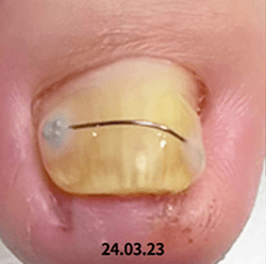
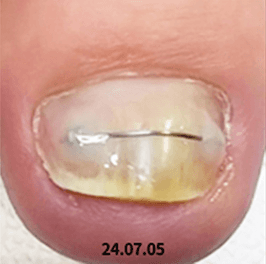
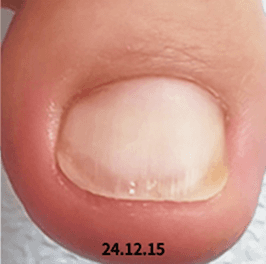
Individual results vary. The length of treatment depends on the nail’s curvature, inflammation and how quickly the nail grows.
Ingrown toenail treatment for foreigners in Korea
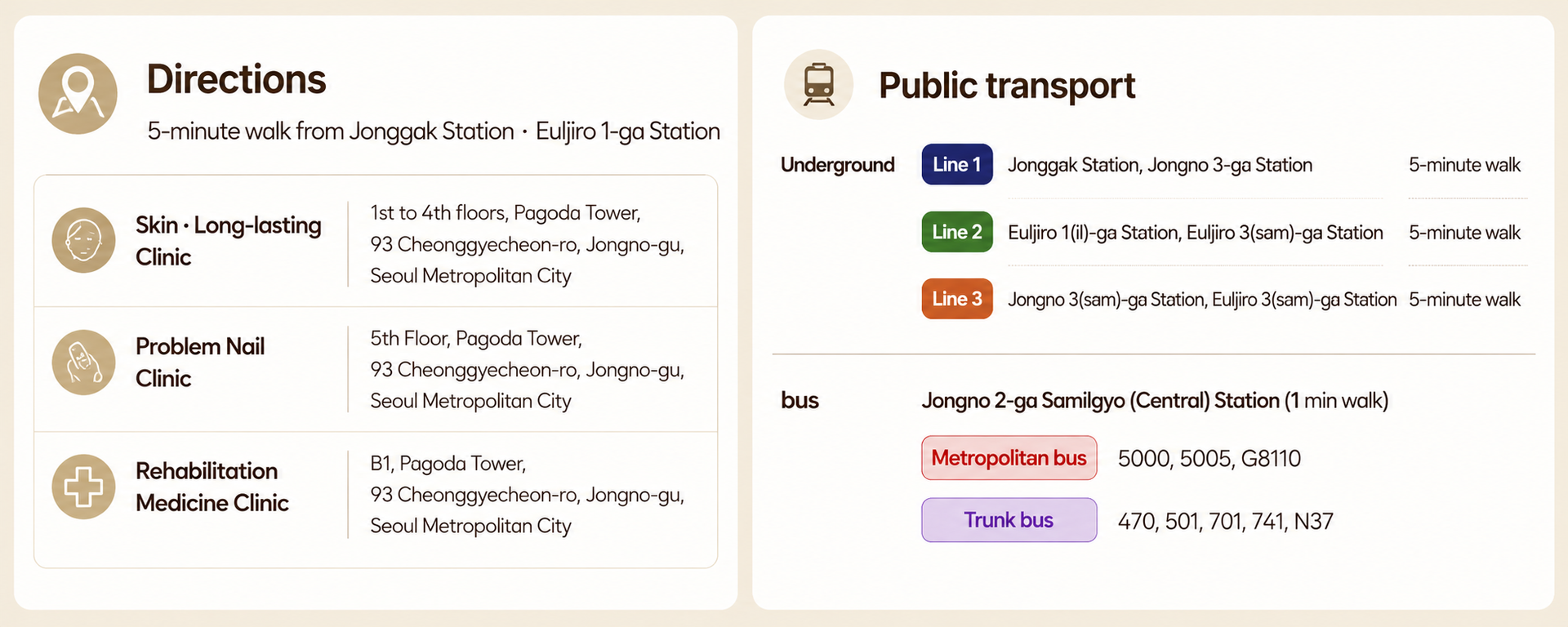
Many international patients have an ingrown toenail treated during a short stay in Seoul because correction is quick and needs little downtime. Obliv Clinic Seoul Origin is a five-minute walk from Jonggak Station and easy to reach from Myeongdong hotels.
- Tourists visiting Seoul and business travellers
- Expats living in Korea
- English-friendly consultation
- Convenient location near Myeongdong
- Same-day treatment where possible
Can an ingrown toenail heal without treatment?
Mild cases may improve with proper nail care, comfortable shoes and good hygiene. Painful, swollen, infected or recurring ingrown toenails usually need professional treatment. Delaying can lead to:
- Worsening pain and swelling
- Infection, pus or bleeding
- Difficulty walking and repeated recurrence
How to stop it coming back
- Cut toenails straight across, and not too short
- Don’t round the corners deeply
- Wear shoes with enough toe space
- Keep feet clean and dry; avoid repeated toe pressure
- Treat infection early and seek care if pain returns
Ingrown toenail: frequently asked questions
Is ingrown toenail treatment painful?
Non-surgical correction does not need anaesthesia. When a minor procedure is needed, it is performed with pain control. Mild cases may only require careful nail care and inflammation treatment.
Can an ingrown toenail become infected?
Yes. If the nail keeps pressing into the skin, redness, swelling, pus and infection can develop.
Do I need the whole toenail removed?
Not usually. In most cases the nail is corrected and kept; only the painful nail edge is treated or partially removed when medically necessary.
Can tourists receive ingrown toenail treatment in Seoul?
Yes. Many foreign patients have ingrown toenails treated during short visits to Seoul. You can book in English via WhatsApp.
How can I prevent ingrown toenails?
Cut nails straight across, avoid tight shoes, don’t trim nails too short, and keep feet clean and dry.
When should I see a doctor for an ingrown toenail?
Seek medical care if you have pain, swelling, redness, pus, bleeding or irritation that keeps coming back — and promptly if you have diabetes.
Keep reading
Medical review
Written and medically reviewed by the Obliv Clinic Seoul Origin medical team, who diagnose and treat nail and foot conditions in person in Seoul. Last reviewed on 14 October 2026. This page is for general information and does not replace a consultation.
Stop the pain — and keep your nail.
Send us a photo of your toe and your travel dates on WhatsApp. We’ll reply with available times.
New paragraph
New paragraph