Toenail Fungus Treatment in Seoul — cleared at the root.
Toenail fungus (onychomycosis) is treated with a medically confirmed diagnosis followed by a combination of laser therapy, prescription antifungals and medical nail care. At Obliv Clinic Seoul Origin, near Myeongdong and Jonggak Station, international patients are diagnosed in person and treated without removing the nail.
Toenail fungus in 30 seconds
- What it is: a fungal infection (usually dermatophytes) of the nail plate and nail bed, medically called onychomycosis.
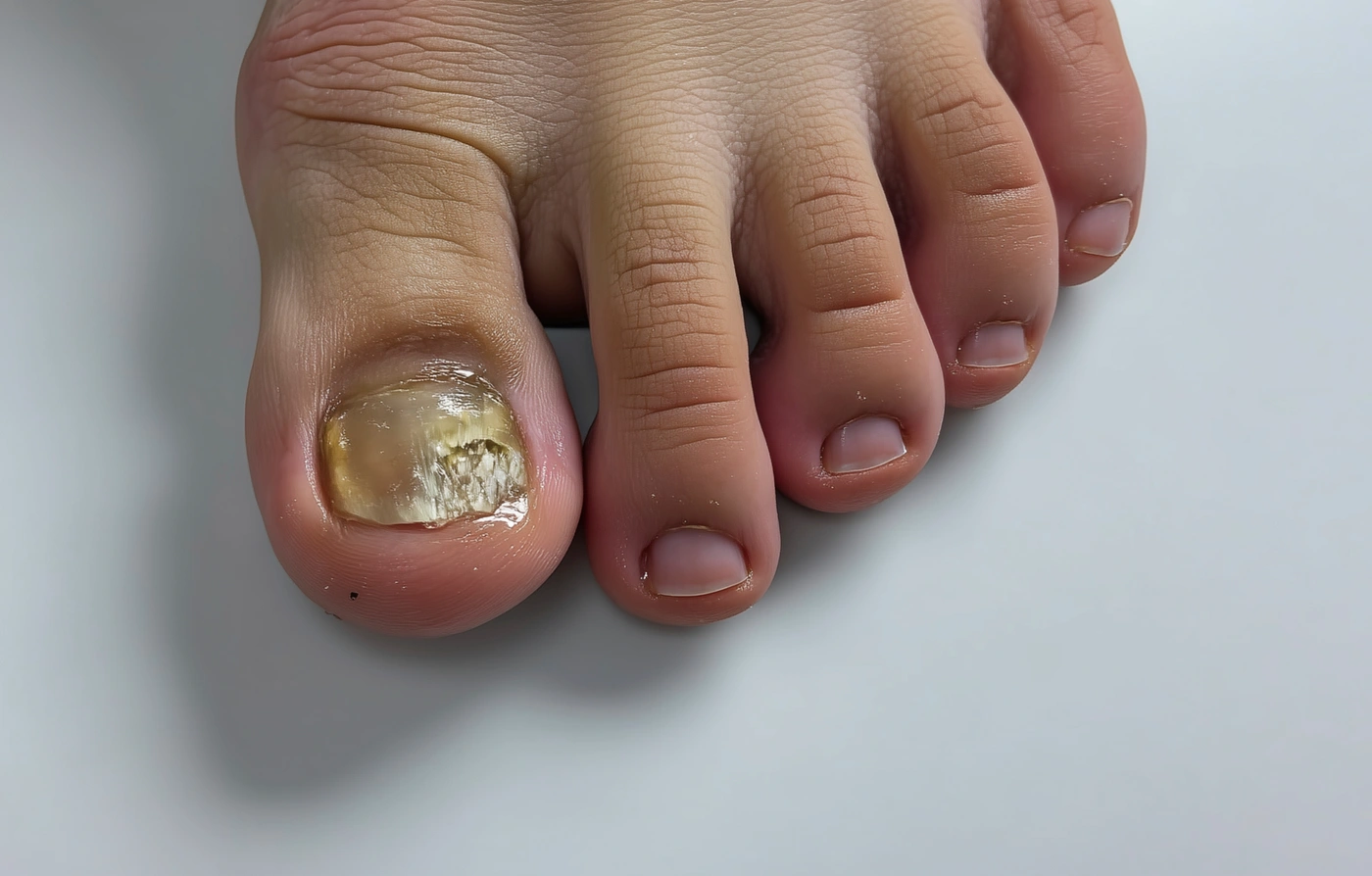
- Key signs: yellow or white discolouration, thickening, crumbling edges and a nail lifting from its bed.
- How it is treated: diagnosis by KOH microscopy, then laser therapy, oral or topical antifungals and medical nail debridement — often combined.
- How long: several months, because a toenail needs roughly 12–18 months to grow out completely.
- Will it go away alone? Rarely. Untreated fungus tends to thicken the nail and spread to other nails or the skin.
What is toenail fungus?
Onychomycosis develops when fungi invade the nail plate, nail bed or the skin around it. It can affect one nail, several nails or the whole nail plate, and it usually progresses slowly — which is why it often becomes chronic before people seek care.
Distal subungual
The most common form. Starts at the tip of the nail and spreads inward toward the cuticle.
White superficial
Chalky white patches on the nail surface, often easier to reach with topical care.
Proximal subungual
Begins near the cuticle and can be associated with weakened immunity — worth a full check-up.
Total dystrophic
Advanced infection with severe destruction of the whole nail. Needs a combined medical plan.
Symptoms and causes
Many patients with toenail fungus also have athlete’s foot. Fungi thrive in warm, moist places — and Korea’s humid summers can raise the risk.
Signs of a fungal nail infection
- Yellow toenails or white discolouration (see discoloured toenail treatment)
- Thickened, hard-to-cut nails (see thick toenail treatment)
- Brittle nails with crumbling edges
- Nail lifting from the nail bed or distorted nail shape
- Foot odour, and pain while walking in severe cases
Common risk factors
- Public showers, swimming pools and shared slippers
- Sweaty feet and tight, non-breathable shoes
- Nail trauma and untreated athlete’s foot
- Ageing, diabetes and poor circulation
- Humid weather and sharing nail tools
How toenail fungus is diagnosed
Psoriasis, nail trauma, eczema and bacterial infection can all look like fungus. Confirming the diagnosis first avoids months of the wrong treatment.
Clinical nail examination
Colour, thickness, pattern and the skin around every nail are assessed in person.
KOH test & microscopy
A nail scraping is examined under the microscope in the clinic to confirm fungal elements.
Fungal culture
Where needed, culture identifies the organism to guide medication choice.
Nail thickness review
Thickness and nail-bed involvement decide whether debridement or laser comes first.
Toenail fungus treatment options in Seoul
Most chronic cases respond best to a combination. Your plan is matched to the type of infection, the number of nails involved and your general health.
Laser toenail fungus treatment
MFDS-certified laser devices are applied in alternation to reach fungus hidden deep in the nail — useful for chronic or resistant cases, thickened nails and lowering recurrence risk.
Laser fungal nail treatment →Oral antifungal medication
Moderate to severe infections often need prescription tablets such as terbinafine, itraconazole or fluconazole, usually for several months as the nail grows out.
Onychomycosis treatment →Topical antifungal treatment
Mild infections may respond to medicated solutions, creams or lacquers such as ciclopirox, efinaconazole or amorolfine.
Fungal nail treatment →Debridement & nail care
Thick-nail reduction, removal of fungal debris, trimming and cracked-skin care help medication and laser penetrate — and make walking comfortable again.
Nail cleaning treatment →Before and after laser treatment
A real course of treatment at Obliv Clinic Seoul Origin. A healthy nail grows in from the base while the infected portion is trimmed away over the sessions.
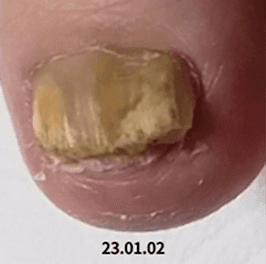
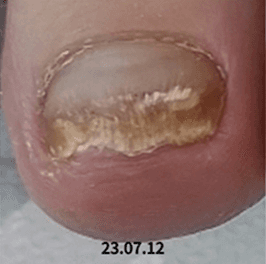
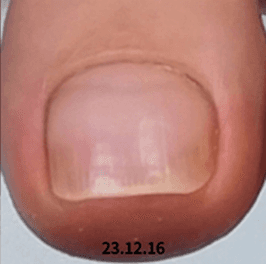
Individual results vary. The number of sessions depends on the type and extent of infection, nail growth and adherence to aftercare.
Athlete’s foot and toenail fungus
Tinea pedis and onychomycosis are caused by the same fungi and often re-infect each other. Treating the skin and the nail at the same time reduces recurrence.
- Peeling skin or cracks between the toes
- Itching or a burning sensation
- Persistent foot odour
How to prevent it coming back
- Keep feet dry, especially between the toes
- Wear breathable footwear and change socks daily
- Avoid walking barefoot in public showers
- Disinfect shoes regularly; don’t share nail tools
- Treat athlete’s foot early
Foreigner-friendly toenail fungus treatment near Myeongdong
Obliv Clinic Seoul Origin is a five-minute walk from Jonggak Station and an easy trip from Myeongdong hotels. Consultations are available in English, and treatment can usually start on the day of your visit.
- English-speaking consultation
- Central location near Myeongdong
- Same-day appointments
- Prescription treatment and laser therapy in one visit
- Medical foot care by specialist staff
- Foreign credit cards accepted
See a doctor if…
- Nails become thick or painful, or walking becomes uncomfortable
- Nail colour changes or the infection spreads to several nails
- Over-the-counter products haven’t worked, or the fungus keeps returning
- You have diabetes or a circulation disorder — don’t self-treat
Toenail fungus: frequently asked questions
What is toenail fungus?
Toenail fungus, also called onychomycosis, is a fungal infection of the toenails and the surrounding nail structures. It usually causes discolouration, thickening and crumbling of the nail.
Is toenail fungus contagious?
Yes. Fungal nail infections can spread through contaminated floors, shoes, socks and nail tools, and by direct contact — including from your own athlete’s foot to your nails.
Can toenail fungus go away without treatment?
Most fungal nail infections do not fully resolve without proper medical treatment, and they tend to worsen over time.
How long does toenail fungus treatment take?
Usually several months. Toenails grow slowly, so a clear nail needs time to grow out fully, and fungal organisms are difficult to eliminate completely. Each laser session takes about 30 minutes.
Is laser treatment for fungal nails available in Seoul?
Yes. Obliv Clinic Seoul Origin uses MFDS-certified laser devices for chronic or resistant toenail fungus, often combined with medication and medical nail care.
Can foreigners receive toenail fungus treatment in Seoul?
Yes. International patients can book in English via WhatsApp, be diagnosed the same day and start treatment during their stay.
Keep reading
Medical review
Written and medically reviewed by the Obliv Clinic Seoul Origin medical team, who diagnose and treat nail and foot conditions in person in Seoul. Last reviewed on 14 October 2026. This page is for general information and does not replace a consultation.
Get your nails checked by a doctor — not a salon.
Message us with a photo of your nails and your travel dates. We’ll reply with available times.
New paragraph